


The search for the right enterprise asset management software can feel challenging, especially when every solution claims to be the best. Still, it’s important to choose one — otherwise, organizations face increased operational costs, poor asset visibility, unexpected breakdowns, and the inability to scale.
But sorting through all the options isn’t easy. The real challenge is finding the right EAM tool that actually aligns with your needs, budget, and scalability goals. That’s why we’ve created this guide — a detailed enterprise asset management software comparison covering key features, pricing, and pros and cons of the top platforms. So, you don’t have to dig through endless vendor promises. Let’s get started.
Enterprise Asset Management Software Comparison – Top 10 Picks in 2025
The market is full of different EAM solutions, so narrowing down the best fit for your organization can be time-consuming and challenging. We have handpicked the 10 best EAM solutions and created an enterprise asset management software comparison, based on features, pricing, and overall value. This allows you to easily shortlist your options. Here’s the comparison:
- Teqtivity
Teqtivity is a complete package for enterprises that are looking to sustain or scale their operations. It provides effective inventory and asset lifecycle management for various industries, including finance, education, healthcare, construction, manufacturing, and tech. The best part? It supports a variety of business teams, such as help desk, management, operations, and supply chain.
Moreover, the versatility is what makes Teqtivity one of the best EAM solutions for scaling organizations. It provides centralized and real-time data for IT asset visibility. This allows enterprises with multiple locations to easily track their equipment across different geographical areas. Teqtivity also supports integration with all the tools a business uses, including Google Workspace, Jamf, Jira, Microsoft Intune, Okta, Slack, ServiceNow, and Crowdstrike.
It further helps in audit, so you can always keep your business audit-ready with Teqtivity. It logs all the important asset-related actions to create detailed audit documentation and ensure regulatory compliance for every critical asset.

Pros
- Smooth and secure onboarding/offboarding.
- Full asset lifecycle management for predictive maintenance.
- Maintenance alerts for reduced downtime and extended asset lifespan.
- Automated workflows to minimize human error.
- Detailed, visual dashboards to track everything on a single screen.
Cons
- Advanced features might be more than what small teams need.
Pricing Model
- User-based pricing model with a 14-day trial.
- IBM Maximo
Maximo is an EAM solution that helps large organizations manage critical assets and reduce downtime. That said, the key focus of IBM Maximo is to increase operational efficiency. That is why it provides integration with IBM’s AI model, watsonx. This generative AI allows users to quickly retrieve and summarize asset data to spend less time on manual processes.
Maximo simplifies maintenance tasks and costs with better resource allocation. It enables teams to identify overused and underutilized assets, so they can distribute their IT equipment accordingly. This EAM system also improves compliance by supporting industry-specific regulations and standards.

Pros
- Better decision-making with real-time data and insights.
- AI-powered asset tracking.
- Allows spare parts management.
- Supports large organizations and government offices.
Cons
- Comparatively more expensive than many other EAM solutions.
- Not ideal for businesses with no experience in EAM.
Pricing Model
- Only custom pricing plans.
- SAP EAM
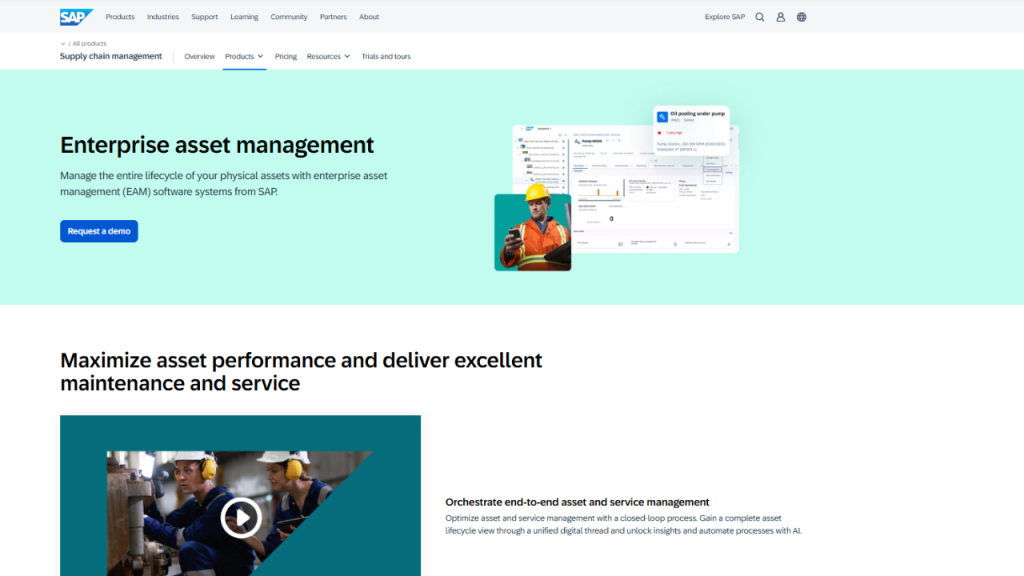
SAM EAM is one of the top enterprise asset management EAM software when it comes to sustainability. It aligns businesses with sustainable goals, extends asset life, and engages in the circular economy. This EAM solution provides AI-based preventive maintenance to predict an equipment’s failure based on its historical services. So, businesses can proactively estimate the remaining useful condition of an asset.
The enterprise asset management tool by SAP also focuses heavily on collaboration. It provides a centralized approach, just like Teqtivity, to bring all assets into one enterprise-wide ecosystem. This allows all stakeholders of an organization to monitor each asset throughout its entire lifecycle. Another impressive feature of SAP EAM is its offline availability. This way, a business can continue to manage its assets regardless of its network connectivity.
Pros
- A greater emphasis on sustainability.
- Offers mobile asset and inventory management.
- Useful for remote/hybrid workforces.
Cons
- Integration with SAP ERP makes replacing EAM modules more challenging.
Pricing Model
- Customized asset-based pricing plans.
- Oracle EAM
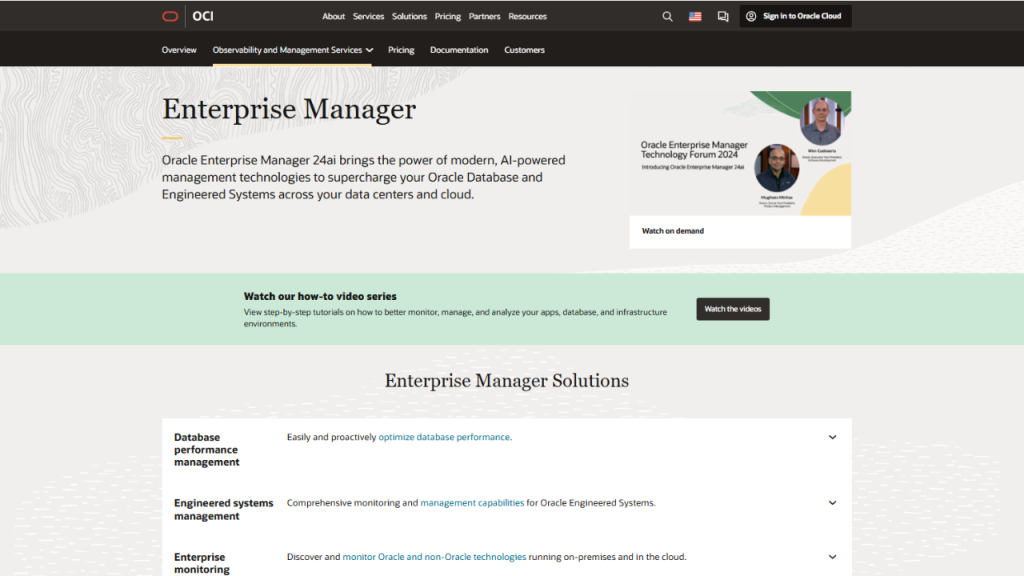
The EAM by Oracle is part of the full E-business Suite. It helps with routine asset management and provides integrations with other Oracle systems, including Oracle Human Resources, Fixed Assets, Projects, Quality, Manufacturing, Purchasing, etc. This allows the system to adapt the industry-specific data of an organization and support its needs.
Furthermore, the Oracle EAM provides users with the ability to classify assets in groups, attributes, costs, maintenance tasks, and work history. It also aims to maximize resource availability for organizations and upgrade resource efficiency. For this, the solution provides several features to create smart maintenance strategies and scheduling.
Pros
- Supports predictive maintenance.
- Provides integrations with other Oracle E-business solutions.
- Creates asset hierarchies for effective asset management.
- Tracks work history to optimize asset performance.
Cons
- Users must connect it to other Oracle Enterprise solutions to get all the benefits.
- Requires Oracle Inventory, Human Resources, Cost Management, and other Oracle products prior to installation.
Pricing Model
- Both asset and user-based custom pricing plans.
- HxGN EAM
The EAM system by Hexagon captures field data from organizations to make some necessary tweaks. It automates work orders, facilities management, and maintenance tasks by tracking costs and efficiency of each asset. In addition, it creates asset hierarchies for effective risk management.
HxGN EAM also comes with a mobile app, allowing you to access and modify asset data with your smartphone. It offers greater control over an enterprise’s critical assets and spare parts with effective inventory management. You can also extend the HxGN EAM solution with Python scripts to meet your specific requirements to create a scalable strategy.

Pros
- Allows integration with existing enterprise systems.
- Automates repetitive tasks like work order management.
- Performs smart calculations to identify potential failures.
Cons
- Customized reporting is complex.
- The EAM system gets too frequent updates, sometimes disrupting key operations.
Pricing Model
- Customized, quote-based pricing plans.
- IFS Cloud
IFS cloud combines its EAM system with ERP and FSM to create a singular platform. It has an embedded AI model to simplify manual tasks and speed up inventory management tasks. This AI model can also automate several functions, such as trend prediction and inventory processes.
IFS cloud also has a deep focus on sustainability as it tracks emission tracking and remanufacturing in an organization. Additionally, it supports several industries, ranging from aerospace and defense to energy, construction, and engineering. IFS Cloud enables businesses to adopt the specific features they need at their current scale. As they grow, they can unlock additional capabilities, preventing IT teams from being overwhelmed by dozens of features.

Pros
- Provides centralized, connected data.
- AI integration to optimize repetitive operations.
- Provides dashboards to track essential KPIs.
Cons
- Integrations are complex and time-consuming.
Pricing Model
- Only quote-based pricing.
- ManageEngine
ManageEngine is an enterprise IT asset management system that focuses on hybrid workspaces with its end-to-end asset tracking. It monitors both software and hardware assets across multiple locations or large teams and creates customized reports for businesses. Also, ManageEngine is one of the few EAM systems that generate purchase orders and integrate this process into its workflows.
Also, ManageEngine has a mobile application available for both iOS and Android, so you can track your assets from anywhere at any time. It provides dozens of customization options to tailor the dashboards according to your business’s specific needs.

Pros
- Provides root cause analysis of equipment breakdowns.
- Helps with better resource allocation.
- Has both on-premise and cloud models.
Cons
- The setup and configuration of the on-premise model require technical expertise.
- Integration with third-party tools is limited.
Pricing Model
- Asset-based fixed pricing plans.
- Limble EAM
Limble EAM software is one of the better picks for scaling organizations. Because it streamlines the repetitive and challenging tasks of an enterprise, including asset management, onboarding new facilities, etc. Additionally, Limble eliminates unplanned breakdown budget drains. It offers a predictive maintenance approach for organizations to improve asset performance and minimize spending.
Limble EAM also provides integrations with essential business tools, such as Outlook, Okta, Google Calendar, and Slack. This way, organizations can break down data silos and get unified data insights across all departments and teams. It also helps businesses to ensure all their physical assets match digital inventory management records to pass audits.

Pros
- Suitable for large teams.
- Provides collaboration with vendors and suppliers.
- Supports sustainable maintenance management.
Cons
- Reporting can be quite complicated.
Pricing Model
- Custom pricing plans for enterprises.
- SolarWinds
SolarWinds offers some unique tools in enterprise asset management, including permission analysis, user provisioning, and access alerts. The system also provides real-time security monitoring and allows organizations to set and manage alerts. This way, organizations can proactively maintain their data security and compliance status for all assets.
Also, SolarWinds provides detailed reports and configurations to maintain asset documentation. This enables businesses to accelerate their internal and external audits. This EAM tool also alerts businesses after detecting credential misuse, providing incident response tools to ensure a timely recovery.

Pros
- Deep focus on data security and compliance.
- Provides detailed reporting.
- Simple, easy-to-track dashboards.
Cons
- Lacks some key features for effective IT asset management.
Pricing Model
- Feature-based pricing models.
- Invgate Asset Management
Invgate Asset Management does not directly target enterprises, but it provides all the key tools for large teams. It emphasizes increasing governance and oversight over hardware, fixed, and software assets. Therefore, it provides asset lifecycle monitoring to proactively identify threats and mitigate risks. Invgate allows organizations to set customizable rules for businesses to identify non-compliant devices to ensure every asset meets regulatory compliance.
Also, the data insights in Invgate are quite helpful. They help you identify underused assets and rogue devices to improve cost-effectiveness. The detailed, customizable dashboards give users a detailed overview of software usage in enterprises and their licenses. This way, you can timely detect unsupported software to improve audit-readiness.

Pros
- Excellent for audits and compliance.
- Offers vendor contract management.
- Allows importing sheets to quickly add legacy data.
Cons
- Lacks a vulnerability control tool.
- Does not provide supply chain management tools.
Pricing Model
- Asset-based custom pricing plans.
Choosing the Right EAM System for Your Business
Let’s look beyond the basic enterprise asset management software comparison. These are the things to consider when choosing the right EAM system for your business:
- Key Questions for Organizational Fit
When exploring a management system, it is essential to ensure the system meets all your requirements. Therefore, ask these questions from the vendor:
- Can the EAM system scale with my organization?
- Does the platform support industry-specific regulatory compliance to create audit trails?
- What integrations are available to support supply chain, inventory management, HR, and vendor management?
- Does the system include features for predictive maintenance and asset lifeccyle management?
- The Importance of a Demo/Pilot
It is always a good idea to choose an asset management system that supports a live demo or pilot phase. This provides clarity on the key features, like asset lifecycle management, user interface, customized reporting, and audit tools. That is why tools like Teqtivity provide a 14-day free trial, so customers can test all the functionalities. Moreover, Teqtivity offers a free product demonstration, showing how the EAM system actually works. This way, organizations can make their final decision without investing any money.
- Modern Features for Enterprises
Enterprise asset management has completely changed over the last decade. It is no longer limited to just basic inventory management controls modern EAM solutions provide onboarding and offboarding, compliance monitoring, audit trails, and much more. These are the features that all businesses need today.
So, it is important to consider that these features are present in your shortlisted options:
- Real-time tracking across multiple locations and departments to facilitate hybrid/remote working models.
- Automated maintenance scheduling to optimize asset performance and minimize unplanned breakdowns.
- Customized reporting and analytics to support data-driven procurements, retirements, and budgeting decisions.
- Audit-readiness to ensure that all assets are logged and meet compliance regulations.
- Centralized data to smooth team collaborations and provide all the essential insights on detailed dashboards.
These features will ensure that your business can smoothly scale, and the EAM solution will provide scalability, supporting the increasing number of users and asset portfolio.
Why Teqtivity Stands Out?
Teqtivity stands out as the top enterprise asset management (EAM) software. Why? It provides all the key features and functionalities that a business needs to maintain and improve its operational efficiency. At the same time, it supports the growing needs of a scaling organization, ensuring you don’t lag behind in today’s competitive landscape.
Here’s why Teqtivity should be your go-to option for an EAM system:
A Focus on What Matters Most
One thing that makes Teqtivity unique is its purpose-built design for physical assets and IT environments. It zeroes in on real-time data visibility, full asset lifecycle management, instant asset tracking, smart inventory management, and proactive maintenance. These features are not just enough to keep tabs on high-value hardware assets; they offer reduced downtime, extend asset lifespans, and optimize asset performance.
Designed for Modern IT Teams
Teqtivity’s EAM system is cloud-based and supports scaling businesses. It allows organizations to add unlimited asset entries as it offers user-based billing, not asset-based, like many other EAM solutions. This ensures a predictable, transparent pricing plan that meets the budgets of any enterprise. In addition, the cloud-based accessibility supports teams distributed globally due to hybrid and remote working models.
Improves Your Weaknesses
Every business has some weaknesses. Some have a poor IT asset management strategy, while others struggle to maintain their operational productivity and efficiency.
Fortunately, Teqtivity solves all problems by providing deep analytics and customized reports to businesses. It offers dashboards to convey important information. This way, every stakeholder across the enterprise can easily understand the analytics and track key metrics to optimize their operations.
The results? Teams can easily detect their weak areas and improve them with data-driven decisions. So, if you’re ready to enhance your EAM process, give Teqtivity a try today. Book a demo to see how it works!